
What Is REMI Remote Production? How It's Reshaping Live Broadcast
REMI (Remote Integration Model) remote production is an IP-based broadcast workflow that splits physical capture at the venue from the core production team at a centralized hub. This architecture eliminates the need to ship a 53-foot mobile production truck across three states, book hotel rooms for thirty crew members, and coordinate complex physical setups for a single event. For technical directors running multiple events per week, REMI solves the compounding costs and scheduling friction of traditional outside broadcasting.
The remote integration model (REMI) is the engineering response to that problem. Rather than concentrating all production infrastructure at the venue, REMI splits the workflow: a skeleton on-site crew handles physical capture, while the core production team, including the technical director, replay operators, audio engineers, and graphics operators, works from a centralized broadcast production hub. The signal travels over managed IP networks instead of a truck traveling down the highway.
Evaluating REMI requires analyzing its mechanical workflow, the underlying IP standards, and how it compares directly to traditional outside broadcasting and custom flypack deployments.
The model relies on four core pillars:
- Centralized Control: How production roles, such as switching, graphics, and audio mixing, execute at a central hub while only capture equipment and camera operators remain on-site.
- IP-Based Transport: The SMPTE ST 2110 suite and ST 2059 synchronization standards that govern how video, audio, and metadata move across managed IP networks.
- Operational Efficiency: Where REMI delivers measurable reductions in travel, lodging, and shipping logistics, and where those savings get redeployed.
- Hybrid Flexibility: How REMI coexists with traditional mobile production trucks and custom flypacks rather than replacing them outright.
Understanding the Remote Integration Model
Traditional outside broadcasting concentrates everything at the venue: the production truck arrives days before air, engineers cable the facility, and a crew of 30 or more people remains stationed on-site through the event. That model made sense when the only way to switch a live program was to have the switcher physically present. The engineering assumption was that proximity equaled control.
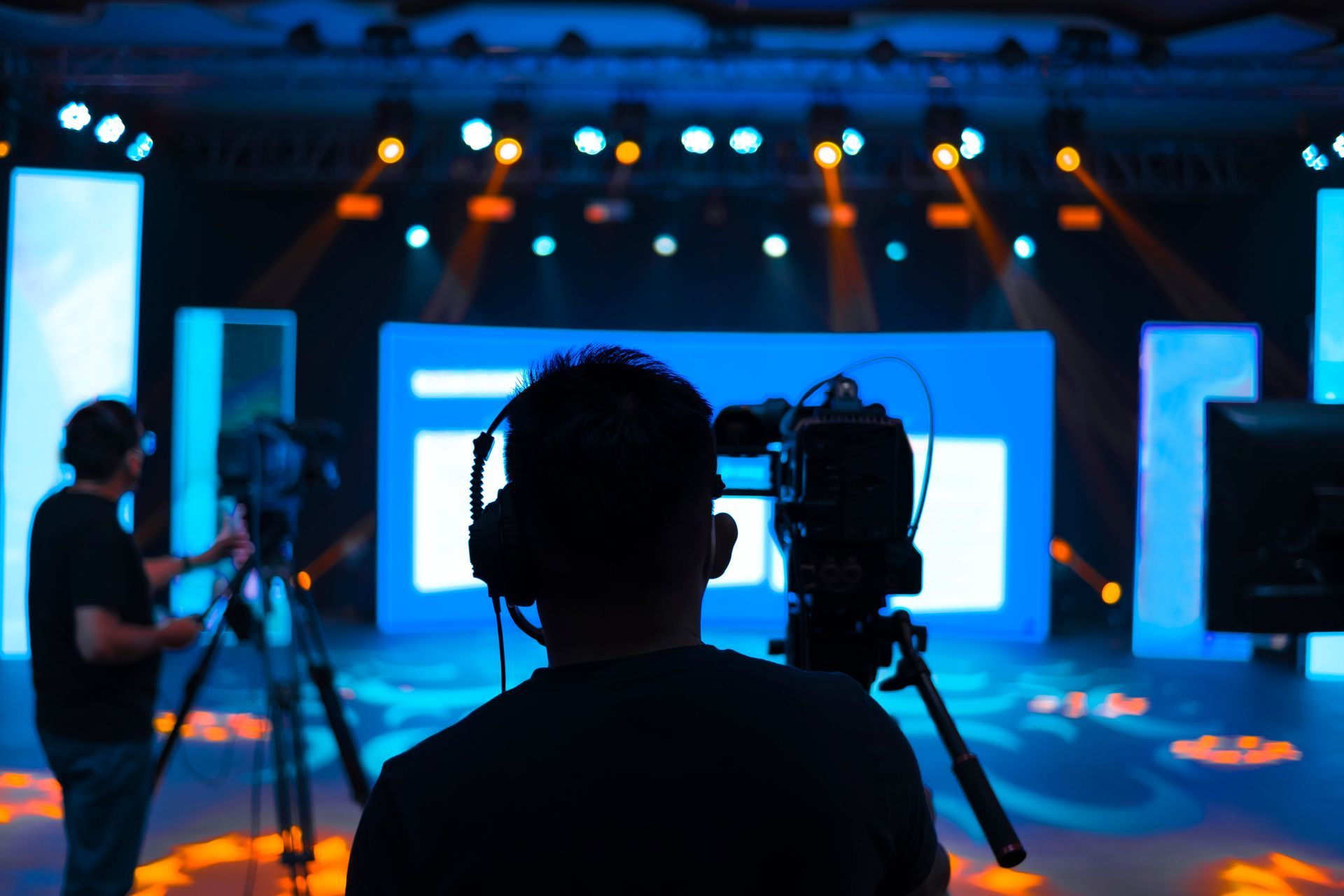
REMI inverts that assumption. Camera operators and a small technical crew remain on-site to manage physical capture: mounting cameras, running cable, and handling on-site audio. The technical director, replay operators, graphics team, and audio mixer work from a centralized control room that may be hundreds of miles away. From their perspective, the workflow is nearly identical to a local production: they see the same feeds on their monitors, operate the same switcher, and communicate with on-site operators over bi-directional talkback. The practical consequence is significant: a single production hub can support multiple events in a single day, with the same core team switching from one venue to the next without ever leaving the building. Crew utilization improves substantially, and the per-event cost of deploying that creative talent drops accordingly.
The traditional skepticism about this model centered on latency and synchronization. Early IP transport introduced enough delay that a technical director cutting on a perceived action would be out of phase with what was actually happening on the field. Modern hardware encoders and managed IP networks have largely resolved that concern. Exact latency figures depend on network conditions, codec configuration, and the distance between venue and hub, so any single number would be misleading; however, the performance envelope of current systems is close enough to on-site switching that experienced technical directors report no meaningful difference in their cutting rhythm after a brief adjustment period. Operational readiness and crew confidence, not theoretical latency ceilings, are now the real variables to engineer around.
How REMI Production Works: The Step-by-Step Workflow
The signal path in a REMI setup follows a defined sequence from the venue to the viewer. Every link must hold. Each stage has specific engineering requirements, and a failure at any point propagates downstream, which is why understanding the full flow matters before you commit to the architecture.
- On-Site Capture: Professional cameras at the venue capture the event and feed uncompressed or lightly compressed signals to on-site encoders. The quality of the capture stage sets the ceiling for everything that follows; no amount of downstream processing recovers information lost here. Garbage in, garbage out.
- Encoding and Compression: Hardware encoders compress the video and audio feeds, commonly using HEVC/H.265 compression, to prepare them for IP transport. The appropriate compression level depends on available bandwidth and the acceptable quality floor for the production; this is an engineering decision, not a default setting.
- Secure IP Transport: Compressed feeds travel over managed IP networks, bonded cellular connections, or the public internet using protocols like SRT (Secure Reliable Transport), which handles packet loss and retransmission without introducing perceptible artifacts. Think of this stage as the air traffic control layer: SRT manages the routing and recovery of data packets the way a controller manages aircraft sequencing, ensuring orderly arrival even when conditions are turbulent.
- Centralized Production: Signals arrive at the production hub, where they are decoded and routed to the physical switcher, audio console, and graphics systems. From this point, the workflow is functionally identical to a local production.
- Distribution: The switched program feed is packaged and delivered to traditional broadcast partners or over-the-top media services for viewer consumption, following whatever distribution agreements govern the event.
The Technical Standards Powering Modern Remote Production
IP-based remote production only works reliably when every piece of equipment in the chain speaks the same language. Interoperability is non-negotiable. That interoperability depends on a set of published standards that define precisely how video, audio, synchronization, and metadata travel across networks. Without them, integrating hardware from different manufacturers becomes a bespoke integration challenge on every deployment.
- SMPTE ST 2110 Suite: This suite defines the professional transport of uncompressed elementary essence flows (video, audio, and metadata) over managed IP networks for live production. It is the foundational specification for broadcast-grade IP infrastructure (per the SMPTE Standards Progress Report 2022).
- Elementary Essence Flows: The suite breaks down into specific sub-standards: ST 2110-10 covers system timing and definition, ST 2110-20 handles uncompressed active video, ST 2110-30 addresses PCM digital audio, and ST 2110-40 governs ancillary data. Each sub-standard can be implemented independently, which gives integrators flexibility in how they build out a system.
- SMPTE ST 2059 Synchronization: This standard family establishes an IP-based studio synchronization system using the IEEE 1588 Precision Time Protocol (PTP) to generate and align interface signals to the SMPTE epoch. In a REMI context, ST 2059 is what keeps remote camera feeds phase-aligned with the production hub without requiring a physical sync generator on-site, a capability that was genuinely difficult to achieve reliably before this standard matured. Timing is everything.
- Open Standards Interoperability: In June 2026, SMPTE made its entire standards catalog, including all published standards, recommended practices, engineering guidelines, and registered disclosure documents (RDDs), freely available to the global media technology community to accelerate adoption and strengthen interoperability (per the SMPTE free standards access announcement). For integrators and manufacturers, that access removes a meaningful barrier to consistent implementation.
Comparing REMI with Traditional OB Trucks and Flypacks
Choosing a production architecture is not a theoretical debate; it comes down to venue access, event frequency, budget structure, and the specific technical requirements of the broadcast. Each model has a genuine use case, and understanding where each one fits prevents expensive mismatches.
A traditional mobile production truck is a self-contained broadcast facility on wheels. It carries its own power, its own routing infrastructure, and enough processing capacity to handle the most demanding live productions: major sports championships, large-scale entertainment events, and multi-camera news coverage where the sheer volume of signals and the complexity of the production demand everything in one place. The advantages of outside broadcasting via a dedicated truck are real: complete operational independence from venue infrastructure, massive I/O capacity, and a crew that has worked together in that specific environment. The challenges are equally real. Moving a multi-million-dollar asset across the country involves significant shipping logistics, insurance exposure, and setup time. The crew traveling with it (engineers, operators, and technical supervisors) generates substantial travel and lodging costs that compound across a full season of events. For a network covering 40 games in 20 cities over 16 weeks, those costs are not trivial.
Custom flypacks occupy a different position in the production toolkit. They offer extreme portability. A flypack packs broadcast-grade switching, audio, graphics, and monitoring systems into transportable road cases that can be checked as freight or shipped ahead to a venue. They deploy in spaces where a truck cannot park: arenas, convention centers, rooftop venues, and international locations where customs and logistics make shipping a full vehicle impractical. Critically, a flypack can be configured for either local switching (all production happens on-site) or as the on-site spoke of a REMI remote integration model, with the flypack handling encoding and transport while the creative production team works from a centralized hub. That dual-mode capability is where flypacks become genuinely strategic; the same hardware investment supports both architectures depending on the event's connectivity and crew requirements. TV Pro Gear engineers custom flypacks and video trucks designed specifically for this kind of operational flexibility, custom tailored to network specifications and built for long-term operational success, with systems that can be reconfigured for local or remote production without rebuilding the infrastructure.
Key Benefits of Adopting a REMI Workflow
The financial case for REMI is clear once you map out what a traditional deployment costs per event. The savings are immediate. Travel, lodging, per diems, and freight for a full production crew add up to a significant expenditure, one that recurs every time an event moves to a new city. REMI reduces the on-site headcount to the minimum required for physical capture: camera operators, a small technical crew, and whatever local support the venue requires. The centralized production team stays put, which means those recurring travel costs largely disappear for the hub-based staff.
That reallocation of budget has a secondary effect that producers sometimes underestimate. Money goes further. When you are not spending on flights and hotel rooms for a graphics operator and a replay technician, those dollars can move toward on-screen talent, more sophisticated graphics packages, or additional camera positions at the venue. The production value visible to the viewer can increase while the total budget decreases, a cost-effective live broadcasting outcome that does not require compromising on network specifications or broadcast-grade signal quality. There is a case to be made that REMI's biggest long-term advantage is not the cost reduction itself but the operational discipline it forces: because the workflow depends on stable IP infrastructure, productions built around REMI tend to be more systematically engineered than those relying on the improvisational flexibility of a truck.
Ready to design a remote production workflow tailored to your specific needs? Contact the engineers at TV Pro Gear at (818) 246-7100 or visit us at TV Pro Gear to discuss your system lifecycle and operational readiness. We are available Monday - Friday, 9:00 a.m.- 6:00 pm PST at our office at 710 N. Mariposa.
Overcoming the Technical Challenges of REMI
REMI is not a simpler production model; it introduces a different set of engineering complexities. It demands technical precision. The challenges shift from physical logistics to network engineering, and the failure modes are different enough from traditional broadcasting that crews encountering them for the first time can be caught off guard. Addressing them systematically before the broadcast is the difference between a flawless execution and an on-air incident.
- Network Reliability: Public internet bandwidth fluctuates, and a single congestion event at the wrong moment can degrade a feed. Bandwidth drops kill broadcasts. The mitigation is redundancy at the transport layer: deploy SRT over a primary managed IP connection, with bonded cellular (LTE/5G) as an automatic failover, and satellite connectivity (including low-earth-orbit options like Starlink) as a tertiary path. Dual-WAN routers with automatic failover switching handle the transition between paths without operator intervention.
- Multi-Camera Synchronization: Feeds arriving from multiple on-site cameras must be phase-aligned at the hub before they reach the switcher. Hardware encoders that support Genlock and phase-alignment, combined with SMPTE ST 2059 PTP synchronization, handle this at the infrastructure level. Skipping this step produces the kind of frame-offset artifacts that are immediately visible on a cut.
- Crew Communication: Keeping on-site camera operators in sync with a remote technical director requires a bi-directional talkback system that runs alongside the video feeds without perceptible delay. IP-based intercom platforms integrated into the production infrastructure handle this reliably, and the tally system, which tells camera operators which camera is live, must be extended over IP to the on-site crew with the same priority as the program feed itself.
The Future of Live Broadcast and IP Standardization
The trajectory of the industry is clear. Every major broadcaster and production company investing in new infrastructure is building on IP, and the pace of that transition is accelerating as the underlying standards mature and the hardware ecosystem around them deepens. What was a specialized capability five years ago is becoming the baseline expectation for broadcast-grade production.
SMPTE's decision to make its full standards catalog freely accessible to the global media technology community is a significant catalyst for that transition. When standards are openly available, developers and integrators implement them consistently rather than working from incomplete documentation or second-hand interpretations, and consistent implementation is what makes interoperability real rather than theoretical. The practical effect for remote production is that the pool of compatible hardware expands, integration costs decrease, and the risk of deploying a system built on incompatible components shrinks. As IP networks become more stable and widely available (including at venues that previously lacked the connectivity to support REMI), the distinction between local and remote production will continue to erode. REMI will increasingly be the default architecture, not the alternative one. The future is IP.
Partnering with a Seasoned Broadcast Engineering Expert
TV Pro Gear was founded in 1997 by producer Andrew Maisner, which means the engineers here have been working through the industry's transitions (from analog to digital, from SDI to IP, and from local to remote production) for over 25 years of practical broadcasting expertise. That history matters in a field where the gap between a system that works in a demo environment and one that holds up under the pressure of a live broadcast is often a matter of engineering judgment accumulated over years of deployment. Experience prevents on-air failures.
The company's approach is built around a proven design-build-train workflow: assess the production requirements, engineer the system architecture, build and configure the hardware, provide full operational training to build crew confidence, and deliver ongoing post-build support through the operational life of the system. That means TV Pro Gear does not hand off a custom flypack or a broadcast studio build at delivery and consider the job complete; we assign a dedicated staff coordinator to manage the post-sale relationship where operational readiness gets tested and refined. The service area is global, which matters for productions that move across regions or require remote commissioning and support. We support global operations. Pricing is customized based on your specific engineering requirements, because a system designed for a regional sports network covering 60 games a season has fundamentally different specifications than one built for a corporate broadcast studio or a touring entertainment production.
Frequently Asked Questions About REMI Remote Production
What is the difference between REMI and cloud-based production?
REMI routes camera feeds from the venue to a physical centralized hub, such as a local studio or dedicated control room, where hardware switchers, audio consoles, and graphics systems process the program. Cloud production routes those same feeds to virtualized infrastructure hosted on platforms like AWS, where software-defined switchers and processing tools handle the production. The distinction matters operationally: REMI retains the hands-on hardware interface that many technical directors prefer, while cloud production offers greater scalability and geographic flexibility at the cost of introducing additional network hops and dependency on third-party platform availability. Neither model is universally superior; the right choice depends on the production's scale, the crew's familiarity with virtualized tools, and the acceptable risk profile for the broadcast. Choose based on risk.
Can REMI support 4K UHD broadcasts?
Yes, provided the system is engineered with sufficient bandwidth capacity and hardware encoders capable of HEVC compression at 4K resolutions. The specific bandwidth requirement depends on the frame rate, color depth, and compression settings chosen for the production; there is no single figure that applies universally. The more important engineering consideration is that every link in the chain, from the camera to the encoder to the transport network to the decoding infrastructure at the hub, must be specified for 4K throughput. A single undersized component creates a bottleneck that degrades the entire signal path. Every component must scale.
How does a director cue camera operators in a REMI setup?
IP-based intercom systems run alongside the video feeds over the same managed network infrastructure, providing real-time bi-directional voice communication between the remote technical director and on-site camera operators. Platforms like Unity Intercom or Riedel Bolero are purpose-built for broadcast environments and introduce no perceptible delay in normal operating conditions. The tally system, which signals to each camera operator whether their camera is currently on-air, on preview, or off, is extended over IP with the same priority as the program feed, so operators have the same situational awareness they would have in a conventional local production.
What happens if the primary internet connection drops during a REMI broadcast?
Redundancy architecture is the answer, and it should be designed before the broadcast, not improvised during one. A dual-WAN router configured for automatic failover can switch automatically between a primary fiber or managed IP connection and a secondary bonded cellular path (LTE/5G) without operator intervention and without dropping the program feed. For productions in locations with unreliable terrestrial connectivity, a satellite connection (including low-earth-orbit services like Starlink) provides a tertiary failover path. The key engineering requirement is that failover switching happens faster than the downstream distribution system's buffer can drain, which keeps the failure invisible to viewers.
Is REMI suitable for smaller, non-sports live events?
Corporate town halls, concerts, educational conferences, and institutional broadcasts benefit from REMI for the same structural reasons that sports productions do: it minimizes the on-site footprint and allows a small local crew to capture high-quality feeds while experienced production staff work from a centralized location. For organizations that broadcast regularly but cannot justify a full on-site production crew for every event, REMI provides access to broadcast-grade production quality without the logistical overhead of deploying that crew to each venue. The connectivity requirements are the same regardless of event type, so the pre-production site survey, confirming upload speed, power capacity, and local technical support, is equally important for a corporate event as it is for a stadium broadcast.
Live broadcasting is a high-stakes environment where failure is not an option. Transitioning to a REMI remote production workflow can dramatically lower your operational costs and simplify logistics, but it requires meticulous engineering and rigorous training to execute reliably. Partnering with an experienced engineering partner like TV Pro Gear ensures your system is day-one ready and your crew operates with absolute confidence.
Ready to discuss your remote production needs? Contact TV Pro Gear today at (818) 246-7100 or visit us at TV Pro Gear. Our engineers are ready to assess, design, and build your next custom flypack or broadcast studio. Visit our office at 710 N. Mariposa, open Monday - Friday, 9:00 a.m.- 6:00 pm PST.
Recent Posts