
Understanding Global Video Production: Working with International Production Crews and Equipment
Coordinating global video production logistics hinges on treating your technical setup and crew coordination as a unified, engineered system. Preventing specialized gear from being seized at customs, ensuring local crews meet network specifications, and protecting sensitive equipment from power differences requires structured pre-production planning.
Navigating Customs and Logistics for Production Equipment
Transporting high-end cameras, lighting, and audio gear across borders requires a strict understanding of temporary importation procedures. Without the correct documentation, your production risks costly delays or outright equipment seizure at foreign ports of entry. Customs delays halt productions. Professional productions utilize the ATA Carnet system, which acts as a "Passport for Goods," an international customs document that allows for the temporary, duty-free, and tax-free entry of professional equipment, whether shipped or hand-carried (per the International Trade Administration ATA Carnet Guide). Administered by the World Customs Organization and the International Chamber of Commerce's World Chambers Federation, the carnet is the most widely recognized instrument for this purpose.
The ATA Carnet system is accepted by approximately 80 countries and territories worldwide, making it the most logistically direct option for temporary importation (per the International Trade Administration ATA Carnet Guide). A carnet is valid for up to one year, with a potential one-year extension, and permits unlimited entries and departures during its validity period, eliminating the need for a Temporary Importation Under Bond (TIB) or registering goods with U.S. Customs & Border Protection via Form 4455 at departure (per the International Trade Administration ATA Carnet Guide). That said, carnets do not cover consumable or disposable items, and selling goods covered under a carnet is subject to a 10% penalty of the duties and taxes in addition to paying the duties and taxes themselves (per the International Trade Administration ATA Carnet Guide). For regions outside the carnet system, such as Egypt, productions must navigate local frameworks like the NAFEZA customs facilitation system, which was launched to expedite the review and release of foreign shipments at ports of entry, though foreign commercial documents still require formal legalization and authentication (per the International Trade Administration Egypt Market Intelligence).
Documentation and Regional Customs Requirements
When coordinating international film shoots within the European Union, additional regulatory frameworks take effect. The Union Customs Code requires all companies established outside the EU to obtain an Economic Operator Registration and Identification (EORI) number to lodge customs declarations (per the EU Import Requirements and Documentation guide). This EORI number must be requested from the customs authority of the first EU Member State of entry and is then valid across the entire EU (per the EU Import Requirements and Documentation guide). The Single Administrative Document (SAD) serves as the importer's declaration for customs duties and VAT, and is valid in all EU Member States as well as European Free Trade Association (EFTA) countries: Norway, Iceland, Switzerland, and Liechtenstein (per the EU Import Requirements and Documentation guide).
Beyond the EU-specific requirements, every international production needs a detailed documentation package assembled before the first piece of gear leaves the warehouse: Prepare these documents early.
- EORI Number Registration: Must be secured from the first EU country of entry before lodging declarations (per the EU Import Requirements and Documentation guide).
- Single Administrative Document (SAD): Used for declaring goods and managing VAT across EU and EFTA nations (per the EU Import Requirements and Documentation guide).
- Standard Shipping Documents: Ensure your logistics team prepares a Pro Forma Invoice, Commercial Invoice, Packing List, Certificate of Origin, and Air Waybill or Bill of Lading (per the International Trade Administration Common Export Documents guide).
- Export Licenses: Verify whether your specialized gear requires specific export licenses or a Destination Control Statement before shipping (per the International Trade Administration Common Export Documents guide).
Ready to eliminate the logistical headache of international broadcast production services? Contact TV Pro Gear at (818) 246-7100 to partner with a dedicated staff coordinator who will manage your global video production logistics from concept to delivery.
Technical Requirements for International Video Production
Beyond customs, overcoming international production challenges requires addressing the technical requirements for international video production at the equipment design stage, not on the morning of the shoot. Design for global standards. The historical development of advanced digital video defined the framework of "decoupling" image capture, processing, storage, compression, and rendering (per the National Institute of Standards and Technology NISTIR 5457). That architectural principle (keeping programming, distribution, and display appliances as independent layers) is precisely what gives modern broadcast systems the flexibility to operate across diverse regional standards without signal degradation (per the National Institute of Standards and Technology NISTIR 5457).
The Grand Alliance High-Definition Television system introduced formats like 1920×1080 and 1280×720 using square pixels to align with computer displays and simplify transcoding (per the National Institute of Standards and Technology NISTIR 5457). MPEG-2 was adopted as the standard video compression syntax, allowing efficient encoding for both progressive and interlaced sources (per the National Institute of Standards and Technology NISTIR 5457). To transport video over high-speed networks, technical solutions mapped MPEG-2 transport packets of 188 bytes into Asynchronous Transfer Mode (ATM) cells of 53 bytes, managing "cell jitter" to maintain precise synchronization of video, audio, and auxiliary data (per the National Institute of Standards and Technology NISTIR 5457). Today, while the industry has moved to UHD, 4K/8K, and IP-based transport, the core engineering requirement is unchanged: your equipment must support flexible signal routing and transcode cleanly between regional broadcast standards.
- Signal Format Compatibility: Ensure your equipment can transcode between regional frame rates and digital signal formats to avoid interlacing artifacts or frame drops.
- Power Compatibility: Verify that all power supplies in your custom flypacks are dual-voltage and can handle regional frequency differences to prevent camera sensor flicker and equipment damage. (Note: specific regional voltage and frequency values should be confirmed against current IEC standards for each destination country.)
- Decoupled Workflows: Use open, publicly documented interfaces to allow organic conversion across diverse networks and devices, preventing rapid obsolescence (per the National Institute of Standards and Technology NISTIR 5457).
"TVPG are the hardest working, most efficient, professional, and friendly vendors that I've ever worked with." - Connie Cochran / City of Stockton
Managing International Film Crews and Local Talent
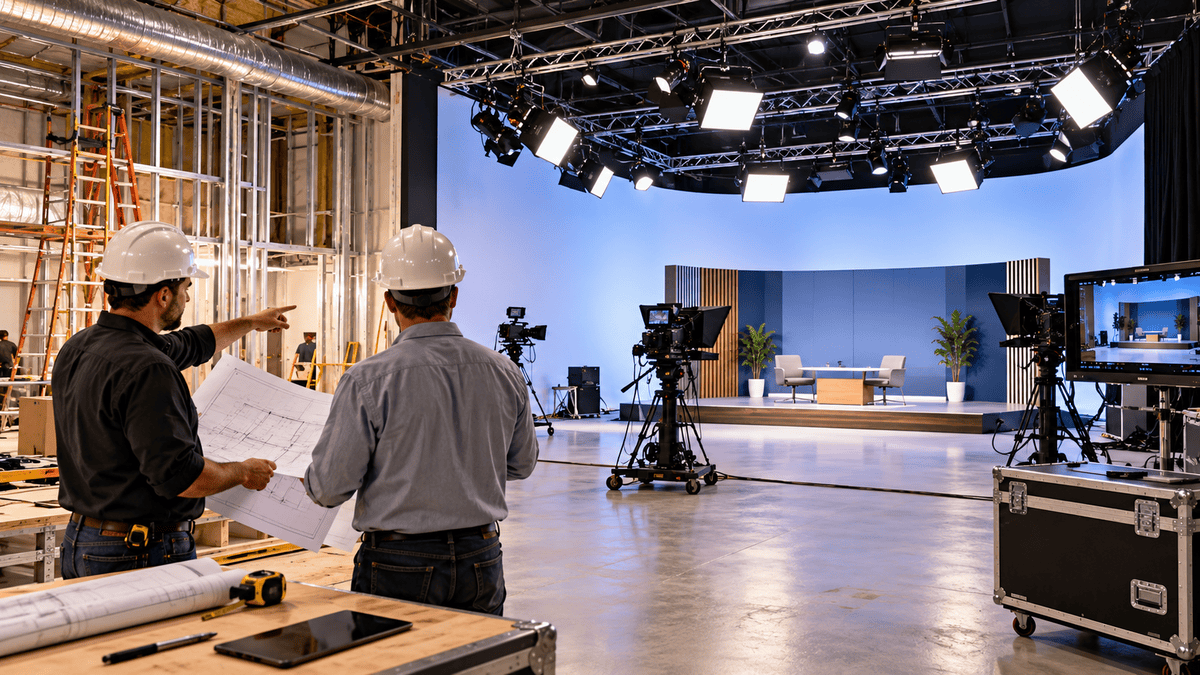
Coordinating international film shoots involves more than shipping gear: it requires managing international film crews and local talent with clear expectations established before anyone boards a plane. Hiring local crews abroad can be operationally inconsistent if you do not establish communication protocols and technical specifications from day one. Many successful productions use a hybrid model: key heads of department, such as the Director of Photography, Technical Director, or broadcast engineer, travel with the production and carry institutional knowledge of network specifications, while local camera operators, utility grips, and production assistants handle on-the-ground navigation of language, permits, and regional logistics. This structure maintains technical integrity without inflating the international travel budget.
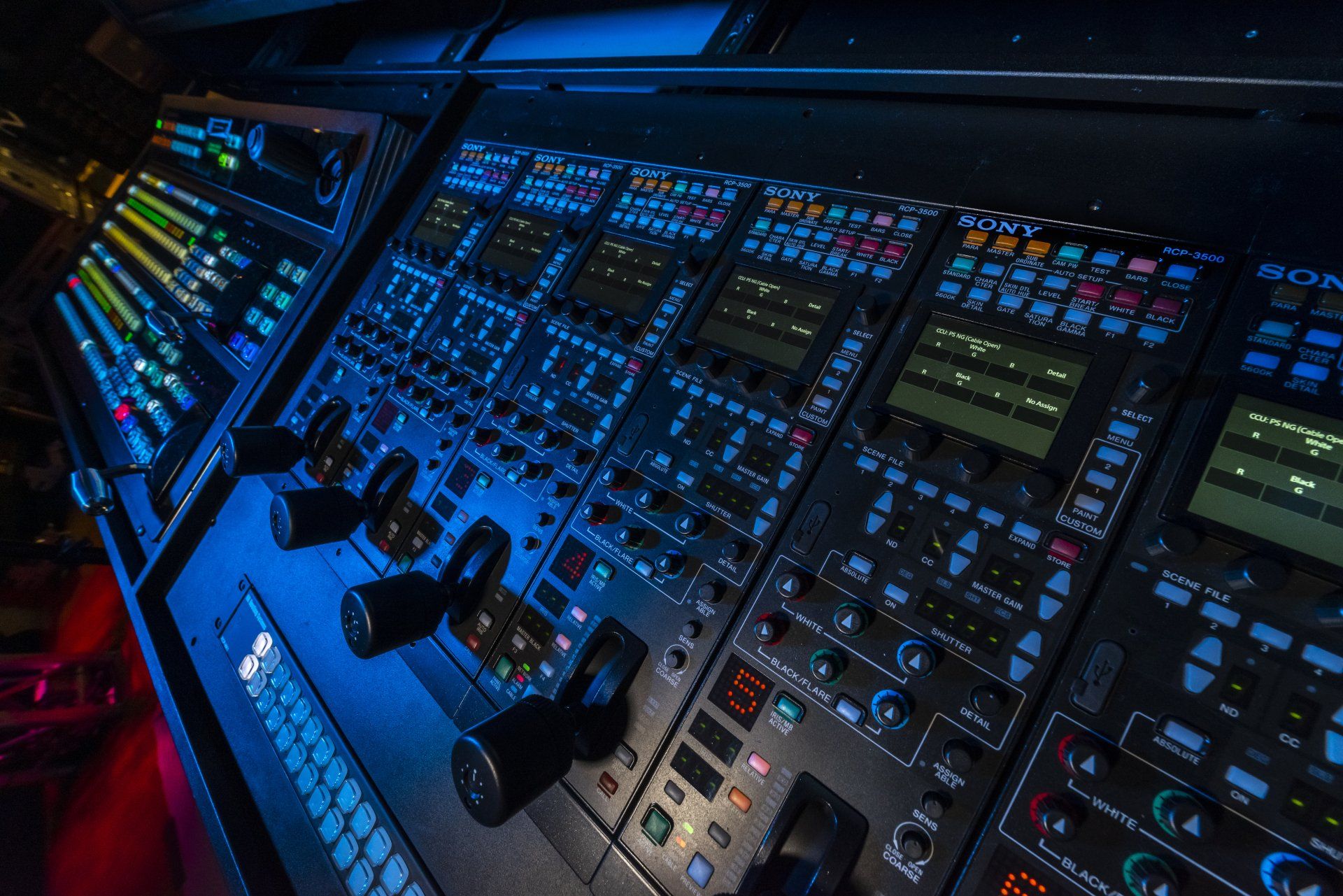
The practical challenge is that local operators may be highly skilled but unfamiliar with the specific flypack configuration or IP-based routing architecture your production relies on. Scheduled prep days for hands-on training before the shoot date are not optional overhead; they are the mechanism that converts a capable local crew into a production-ready team. Building that training into the project timeline from the outset changes the risk profile of the entire shoot. Training reduces operational risk.
"TV Pro Gear is amazing! They are second to none!" - Scott from BackStageGuest.com / Five Finger Death Punch
At TV Pro Gear, we don't just ship equipment: we provide operational training and lifecycle support to ensure your crew has day-one confidence. Contact our team at (818) 246-7100 or email us to discuss how we can support your next international broadcast.
Best Practices for Coordinating International Film Shoots
The difference between a production that runs cleanly and one that depletes time and budget at every border crossing usually comes down to pre-production discipline, specifically regarding signal routing diagrams, customs documentation, and structured crew training. These practices reflect what experienced productions consistently get right:
- Establish Clear Technical Specifications: Provide local crews with detailed signal routing diagrams and network specifications well before the shoot day.
- Vet Local Crews Thoroughly: Look for local operators who have direct experience working with international video production equipment rentals and custom flypack configurations.
- Assign a Dedicated Staff Coordinator: Ensure there is a single point of contact managing the logistics for global film production teams, from flight bookings to local catering and transport permits.
- Plan for On-Site Training: Schedule dedicated prep days for crew training and operator readiness, ensuring everyone is familiar with the specific HD/4K workflows being deployed.
Managing international production crews requires a balance of expert authority and operational empathy. Empathy drives collaboration. Acknowledging that your local crew is working in a high-pressure environment with unfamiliar gear goes a long way toward building a collaborative atmosphere. When you back that empathy with engineered, field-proven systems, paired with structured operational training, you eliminate the factors that produce operator error during a live broadcast.
"Their Flypack was just what we needed. They have made this show a real success." - Brenda Durham / Jackson Dawson Honda
Frequently Asked Questions About International Video Production
What is the difference between progressive and interlaced scanning in international broadcasting?
Progressive scanning displays text, graphics, and computer-generated imagery more cleanly by eliminating the interline flicker and legibility issues associated with interlaced displays (per the National Institute of Standards and Technology NISTIR 5457). While the Grand Alliance HDTV system incorporated both formats to achieve higher spatial resolution within strict bandwidth constraints, modern digital video standards favor progressive formats for high-quality rendering without interlacing artifacts (per the National Institute of Standards and Technology NISTIR 5457). For productions shooting content destined for multiple distribution channels, understanding which format your delivery specification requires, and whether your equipment can transcode between them without quality loss, is a pre-production engineering question, not a post-production fix.
Do ATA Carnets cover consumable items like gaffer tape or batteries?
No. ATA Carnets do not cover consumable or disposable items (per the International Trade Administration ATA Carnet Guide). They are designed strictly for professional equipment, commercial samples, and advertising materials that will return to their country of origin. Consumables must be declared separately and may be subject to local duties and taxes at the destination country.
How do I get an EORI number for an upcoming shoot in the European Union?
You must request an Economic Operator Registration and Identification (EORI) number from the customs authority of the first EU Member State of entry (per the EU Import Requirements and Documentation guide). Once issued, this number is valid across all EU Member States and is required to lodge customs declarations (per the EU Import Requirements and Documentation guide). Plan for this registration well in advance of your departure; processing timelines vary by country, and arriving at a European port without an EORI number will obstruct your shipment.
What happens if I sell equipment that was imported under an ATA Carnet?
Selling goods covered under an ATA Carnet is prohibited without prior customs authorization. Doing so triggers a 10% penalty on the duties and taxes, in addition to paying the duties and taxes themselves (per the International Trade Administration ATA Carnet Guide). Productions that plan to leave gear behind (for a local partner, a resale arrangement, or any other purpose) need to address that through a separate customs procedure before the carnet is issued, not after the fact.
How can I prevent camera flicker when filming under international lighting?
Camera flicker occurs when there is a mismatch between the camera's shutter speed or frame rate and the frequency of the local power grid. To prevent this, camera operators must adjust their shutter angle or shutter speed to match the local power frequency: a critical step in overcoming international production challenges. The specific settings required depend on your camera model and the destination country's grid frequency; confirm the correct values with your camera manufacturer's technical documentation and verify local power specifications before the shoot.
Contact Us Today
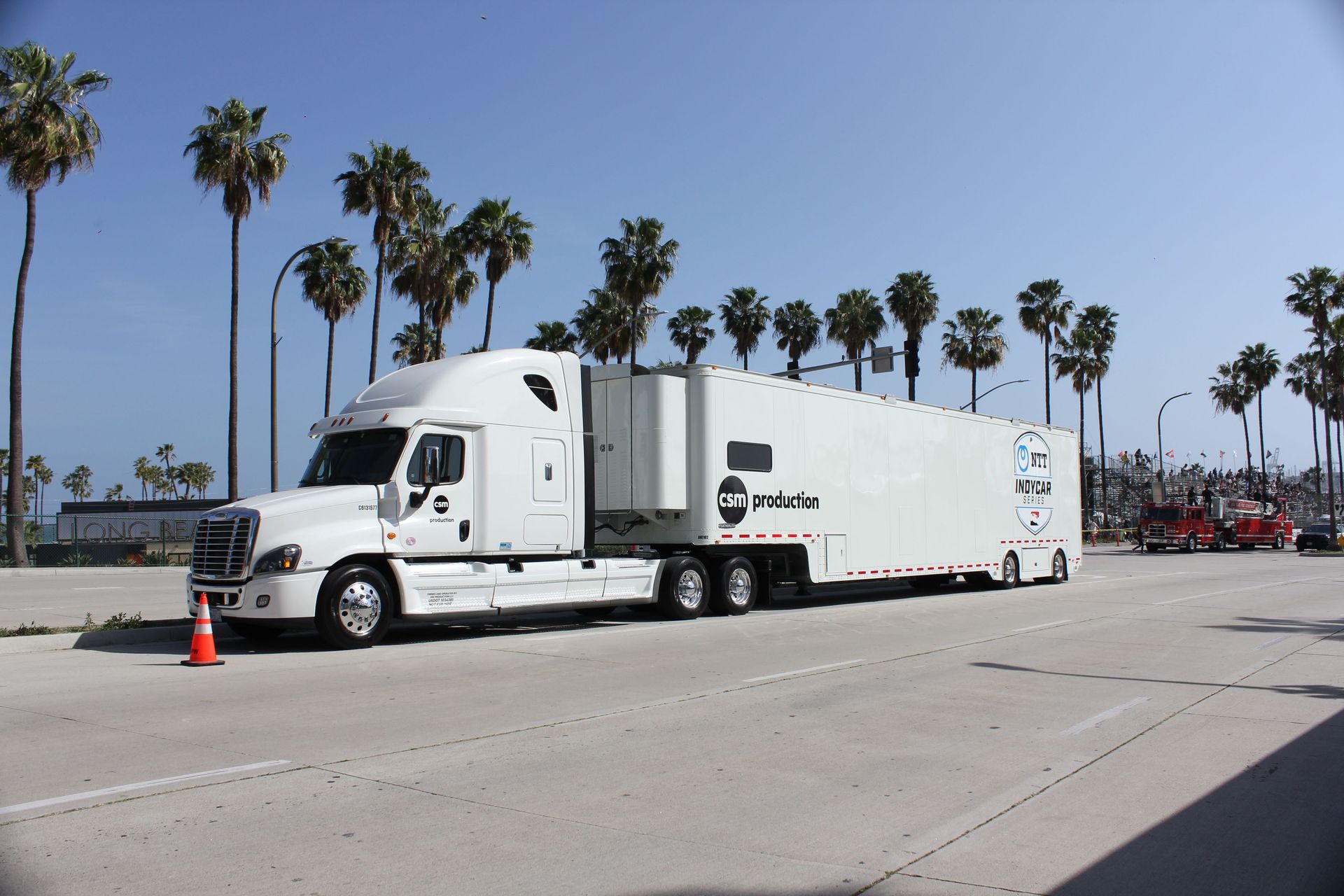
Navigating the complexities of international production crews and equipment logistics requires a partner who understands the full design-build-train-support lifecycle. Since 1997, TV Pro Gear has been engineering custom flypacks and video trucks that meet strict network specifications, delivering operational reliability and risk reduction for broadcasters worldwide. We don't just deliver boxes: we provide the engineering rigor, operational training, and lifecycle support needed to give your team day-one confidence on any continent.
Partner with TV Pro Gear for your next global broadcast. We keep you on air. Contact Andrew Maisner and our engineering team at (818) 246-7100 or explore our custom mobile production systems at TV Pro Gear to request an engineering consultation.
Recent Posts