How Long Does an OB Build Really Take? A Custom Broadcast Truck Timeline
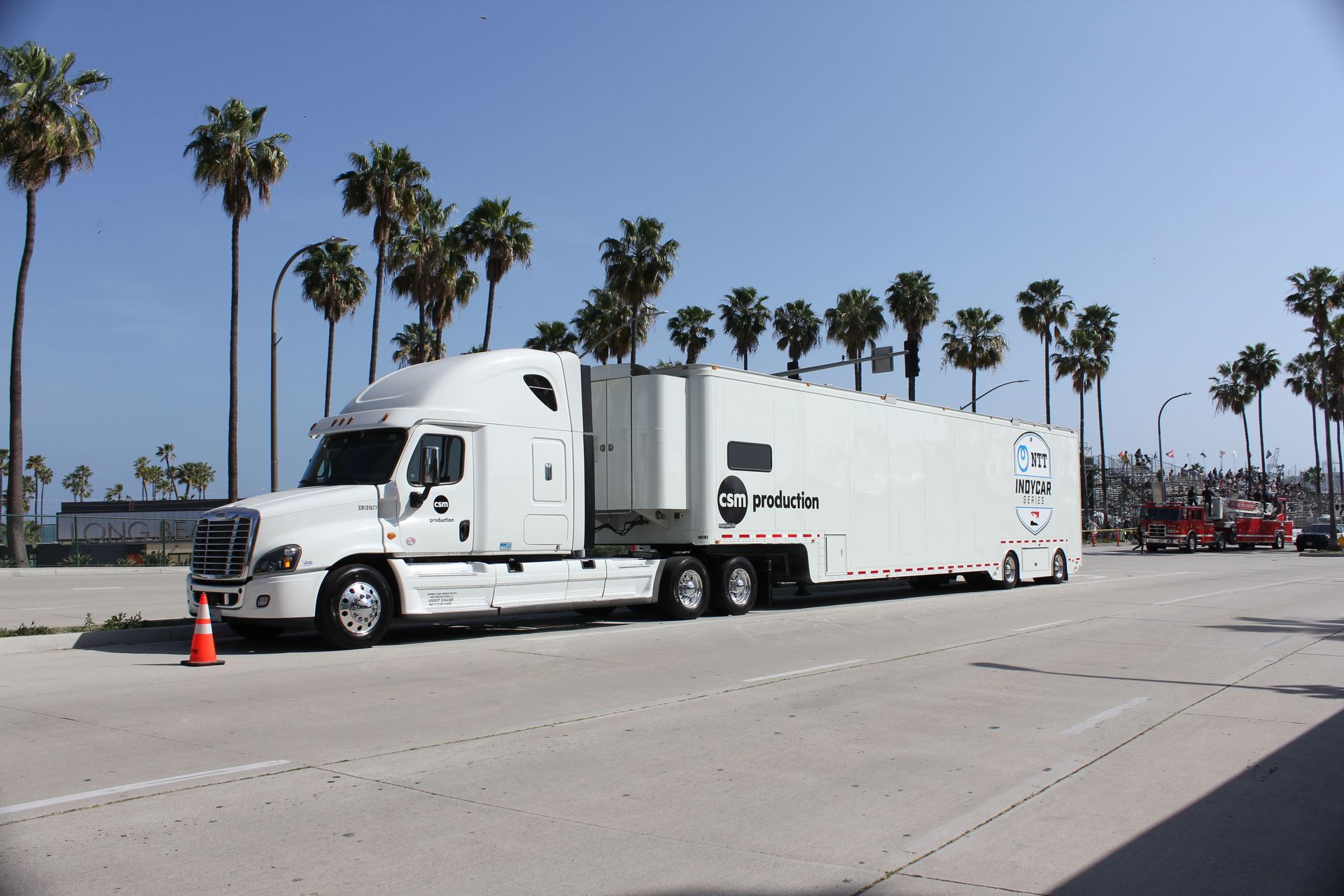
Building a custom mobile production unit is a multi-month, multi-phase engineering project, and the teams that underestimate that complexity are the ones scrambling to explain a missed broadcast season to their stakeholders. There is no shortcut through the process, and the variables that govern your schedule are more multifaceted and interdependent than most procurement plans account for. Every detail matters.
The build timeline runs on two parallel tracks: physical coachbuilding, which covers structural fabrication, HVAC, and power infrastructure, and broadcast engineering systems integration, which covers signal routing, fiber transmission, and your full HD/4K workflow. Neither track can be fully completed without the other, and the handoffs between them are where projects either stay on schedule or begin to unravel. Understanding how those tracks interact, and where the genuine bottlenecks live, is what allows engineering and procurement teams to build a project schedule they can defend.
Understanding the Dual-Track Build Process
A custom broadcast truck carries a level of engineering complexity that has no real parallel in standard commercial vehicle conversion. Every subsystem, including structural reinforcement, thermal management, power distribution, signal routing, and fiber infrastructure, is mutually dependent. A decision made in rack layout affects cable tray routing, which affects HVAC placement, which affects structural load calculations. These are not independent line items you can hand off to separate vendors and reconcile at the end. They must align perfectly.
The coachbuilding track and the systems integration track must run in coordinated sequence, with deliberate handoff points built into the schedule. When teams treat them as separate, sequential phases, finishing the shell and then handing it to the broadcast engineers, they consistently encounter structural modifications that disrupt completed cable runs, thermal issues that require HVAC rework after racks are already mounted, and power distribution panels that need relocation once the full equipment load is calculated. Coordinating both tracks from day one is not a preference; it is the only way to deliver a vehicle with network-grade reliability on a predictable schedule.
The concept of a design freeze sits at the foundation of any build schedule worth trusting. A design freeze is the formal point at which signal flow architecture, rack layouts, and equipment specifications are locked before fabrication begins. It sounds simple, but in practice it requires every stakeholder, including production, engineering, and operations, to sign off on a complete technical specification before a single piece of metal is cut or a single purchase order is issued. Mid-project changes to any of those specifications create cascading delays: a routing switcher substitution can require rack dimension changes, which require coachbuilding modifications, which push the chassis delivery window. TV Pro Gear structures every build around phased approval milestones that enforce the design freeze and keep the custom design tailored to your specifications without allowing scope drift to erode the schedule.
Sourcing the Chassis and Initial Structural Coachbuilding
Chassis sourcing is frequently the first place a broadcast truck build schedule encounters serious friction, and it is often the variable that procurement teams underestimate most. Custom commercial vehicle chassis, specifically the kind that can support the weight distribution demands of high-density broadcast equipment, are not pulled from dealer inventory. Lead times are governed by manufacturer production cycles, the specific axle configurations and GVWR ratings required for your payload, and the broader supply chain conditions affecting commercial truck manufacturing at any given time. Those conditions are unpredictable enough that any specific timeline estimate made today could be materially inaccurate by the time your purchase order is issued.
Attempting to source the chassis independently (separate from the coachbuilder) introduces a different category of risk. This often backfires. Coordinating a third-party chassis delivery to align with a coachbuilder's production window requires precise scheduling that rarely survives contact with manufacturer delays. Beyond the logistics, split procurement creates warranty alignment gaps. When the chassis arrives in a condition that affects the coachbuilding process, the question of who owns the problem becomes genuinely complicated. Working with a single engineering partner who manages chassis procurement as part of the full lifecycle (covering assessment, engineering, testing, training, and maintenance) eliminates that ambiguity and keeps the critical path intact.
Once the chassis is on the floor, structural coachbuilding encompasses the following fabrication phases:
- Structural Reinforcement: Modifying the chassis frame and body to support the concentrated weight of high-density broadcast equipment racks, with careful attention to axle load distribution across the full payload.
- Custom Slide-Outs: Fabricating hydraulic or manual expanding sections that maximize interior workspace for the production crew while maintaining structural integrity and road-legal dimensions during transport.
- RF Shielding and Acoustic Treatment: Installing shielding materials and acoustic insulation to suppress external radio frequency interference and reduce ambient noise on the production floor to a level that does not compromise audio monitoring.
- Specialized HVAC Integration: Designing and installing climate control systems with sufficient capacity to manage the thermal output of fully loaded equipment racks while maintaining operator comfort across a range of ambient conditions.
- Power Generation and Distribution: Integrating heavy-duty generators, UPS systems, and custom power distribution panels engineered to deliver clean, stable power under continuous live-event load.
Ready to design a mobile unit built for your specific workflow? Contact TV Pro Gear at (818) 246-7100 to speak with Andrew Maisner, our dedicated staff coordinator, and engineering team about your custom mobile production unit build schedule.
Broadcast Systems Integration and Rack Cabling
Procurement of specialized broadcast electronics, such as routing switchers, production switchers, multiviewers, custom SMPTE fiber assemblies, and intercom frames, cannot wait until coachbuilding is complete. Lead times on high-end broadcast components are highly volatile, driven by manufacturer production schedules, global component availability, and the concentration of demand around major broadcast seasons. Components ordered late in the process become the single longest item on the critical path, and there is no workaround once you are waiting on a routing frame that will not ship for months. The correct approach is to issue purchase orders for long-lead electronics concurrently with the design freeze, so procurement runs in parallel with coachbuilding rather than sequentially behind it.
The physical integration work that follows is more labor-intensive than most clients anticipate before they see it in person. Precision is non-negotiable. Running high-grade copper and fiber cabling through custom cable trays, terminating thousands of individual connectors to broadcast-standard specifications, mounting equipment into thermally and ergonomically designed rack positions: this is precision work that cannot be accelerated without introducing errors that surface during testing. Your workflow should move as smoothly as your production, with no bottlenecks and no surprises. That outcome depends on the integration phase being executed by broadcast engineers who understand signal integrity, not IT generalists working from a rack diagram. Every connection that is incorrectly terminated or inadequately dressed is a troubleshooting event waiting to happen during your first live event.
The critical milestones within systems integration include:
- Rack Layout and Mounting: Securing equipment according to thermal modeling and ergonomic design, ensuring adequate airflow around high-heat components and positioning operator-facing controls at appropriate working heights.
- Cable Termination and Labeling: Terminating every copper and fiber connection to specification and applying a consistent labeling standard across the entire installation, the kind of labeling that allows a field engineer to trace a signal path in under two minutes during a live broadcast.
- Signal Flow Verification: Systematically testing every video, audio, and control path through the complete HD/4K workflow to confirm signal integrity end-to-end before any system is declared complete.
- Router and Multiviewer Configuration: Programming the central routing switcher and building multiviewer layouts that match the production team's established operational preferences, so operators are not learning a foreign interface on day one.
"TVPG are the hardest working, most efficient, professional, and friendly vendors that I've ever worked with." - Connie Cochran / City of Stockton
Systems Testing, Commissioning, and Quality Assurance
A completed OB van cannot move directly from the integration floor to a live network broadcast. The gap between "all systems installed" and "all systems verified under real-world conditions" is where build quality is proven, and it requires a multi-stage quality assurance protocol that cannot be compressed without accepting meaningful risk.
Thermal load testing is one of the more rigorous phases of commissioning. It cannot be rushed. Every rack is brought to full operational load (all equipment powered, all signal paths active) and the vehicle is subjected to ambient temperature conditions that reflect the range of environments it will encounter in the field. The purpose is not simply to confirm that the HVAC system can keep up; it is to identify any component that runs hotter than its rated thermal envelope, any cable bundle that develops unexpected impedance under sustained heat, and any power distribution anomaly that only appears under full load. Road testing follows a pattern of rigorous checks: the vehicle and its fully integrated rack infrastructure must demonstrate that physical stresses of highway transport do not loosen connections, shift rack-mounted equipment, or introduce vibration-induced signal degradation. These are not perfunctory checks, representing the verification steps that determine whether the vehicle delivers network-grade reliability from the first event forward.
Navigating Regulatory Compliance and Roadworthiness
Regulatory compliance is a core design requirement that must be addressed from the first engineering drawing, rather than treated as a post-build administrative step. It cannot be an afterthought. The categories that govern a custom-built mobile production vehicle span several overlapping regulatory domains, and failing to account for any of them during the design phase creates the kind of last-minute modification work that can push a delivery date by weeks.
The primary compliance areas include:
- Weight Distribution and Axle Ratings: The completed vehicle must comply with federal and state weight limits, which requires that equipment placement and structural modifications be modeled against axle load ratings throughout the design process, not verified after fabrication.
- Electrical Safety and Grounding: Power distribution systems must meet applicable electrical safety codes covering grounding, overcurrent protection, and conductor sizing, protecting both the equipment and the crew operating in a high-density electrical environment.
- Vehicle Safety and Roadworthiness: Meeting requirements for custom coachbuilding modifications, including structural alterations, lighting, braking systems, and emissions compliance, all of which must be verified against commercial vehicle safety regulations before public road operation.
Working with an experienced engineering partner ensures compliance is engineered into the vehicle from the first design review, not retrofitted during final inspection. When compliance requirements are discovered late, such as after structural fabrication is complete or after power distribution panels are installed, the correction work is expensive, time-consuming, and entirely avoidable. The teams that arrive at final inspection without surprises are the ones whose engineering partner treated regulatory requirements as design inputs rather than exit criteria.
Frequently Asked Questions About Broadcast Truck Timelines
Can we speed up the build by sourcing our own chassis separately?
Sourcing the chassis independently often introduces more schedule risk than it eliminates. Coordinating a third-party chassis delivery to align with a coachbuilder's production window requires a level of scheduling precision that manufacturer delays routinely disrupt. Beyond the logistics, split procurement creates warranty alignment gaps: when the chassis arrives in a condition that affects the coachbuilding process, determining responsibility between two separate vendors is rarely simple. Working with a single engineering partner who manages the full lifecycle (covering assessment, engineering, testing, training, and maintenance, from chassis procurement through systems integration) produces a more predictable timeline and a cleaner chain of accountability.
How do mid-project design changes affect the overall schedule?
Mid-project changes to signal flow architecture, rack layouts, or equipment specifications are the most consistent driver of timeline delay on complex OB builds. A change in one component rarely stays contained: a routing frame substitution can require rack dimension changes, which require coachbuilding modifications, which affect cable tray routing, which push procurement timelines. The cascading effect is real and often underestimated by stakeholders who view a single equipment swap as a minor adjustment. Establishing and enforcing a strict design freeze before fabrication begins is the most effective schedule protection available.
Why can't we just buy a standard commercial van and have our IT team install the racks?
Standard commercial vehicles lack the structural reinforcement, HVAC capacity, RF shielding, and power generation infrastructure that high-density broadcast environments require. A standard IT rack installation does not account for the physical stresses of transport, the thermal management demands of fully loaded broadcast equipment, or the signal integrity requirements of HD/4K workflows operating under live-event conditions. The operational consequences of that gap, including equipment failures, thermal shutdowns, and signal degradation, tend to surface at the worst possible moment. A custom-engineered broadcast truck is the only architecture that supports long-term operational success and network-grade reliability across a multi-year service life.
What is the typical lifespan of a custom mobile production unit?
A well-engineered mobile production unit can remain in active service for well over a decade when the coachbuilding and power infrastructure are built to commercial-grade standards. Broadcast electronics and HD/4K workflow components will require modular upgrades as technology evolves, but a high-quality physical chassis, rack infrastructure, and power distribution system are designed to accommodate those refreshes without requiring a full rebuild. The investment in quality at the coachbuilding and integration phases is what makes future technology upgrades economically viable rather than prohibitively expensive.
How does TV Pro Gear support our crew once the truck is delivered?
Our engineering partnership extends far beyond physical delivery. We stay with you. TV Pro Gear provides full operational training and post-build support to ensure your crew is ready on day one. Your dedicated staff coordinator manages the transition from build completion to operational readiness, working directly with your operators to ensure they are fully trained and confident in managing signal routing, fiber transmission systems, and the full production workflow before your first live event. We focus on delivering both a functional vehicle and a highly trained crew capable of operating it at full capacity from the moment it arrives on location. Building a custom broadcast truck is a capital investment in your production capability and your organization's operational security for the next decade or more. The teams that protect that investment are the ones who engage an engineering partner early, enforce a rigorous design freeze, and treat chassis procurement, systems integration, and regulatory compliance as a coordinated program rather than a sequence of independent contracts.
Partner with Us Today
TV Pro Gear, founded in 1997 by a producer, Andrew Maisner, provides full lifecycle support, covering assessment, engineering, testing, training, and maintenance. Our services span physical coachbuilding, broadcast engineering systems integration, testing, commissioning, and full operator training. We stay involved to support your long-term operational success as your workflow and technology requirements develop.
Partner with TV Pro Gear for your next mobile production unit. Get started today. Contact our team at (818) 246-7100 to discuss your project requirements with Andrew Maisner, our dedicated staff coordinator, and our engineering team. For pricing details, please inquire about our custom packages.
Recent Posts